
Everyday life
Life in Bali - everyday life beyond university
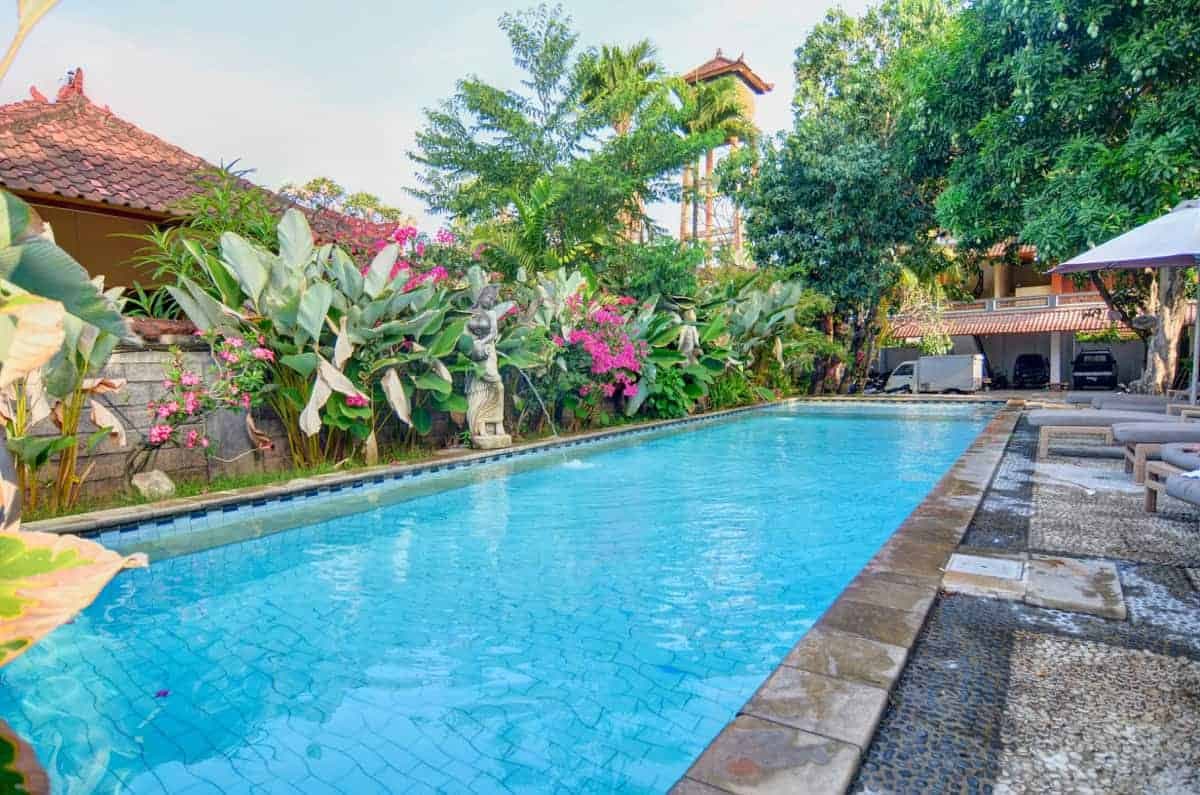
A semester in Bali is more than just lectures. You'll get used to scooter traffic, a warm climate, varied food and a very international community - that's the fun part. But there are also a few practical things you should know beforehand.
What you need in everyday life
Climate & Clothing
Bali has tropical temperatures of between 25 and 32 degrees all year round. Light and airy clothing is therefore ideal. During the rainy season from around November to March, short but heavy showers can occur. Shoulders and knees should be covered when visiting temples out of respect for the local culture.
Scooter instead of car
The scooter is the most important means of transport in Bali and often the fastest way to get from A to B. You need a valid international driving licence to drive a scooter. Monthly hire usually starts at around €50. Bali drives on the left and traffic can be chaotic at first. However, with a little familiarisation, most students get along well. A helmet should of course always be worn. Many accommodations offer scooters directly or arrange trustworthy providers. We will also be offering scooter hire in the near future.
Food & Drink
In Bali, you will find cheap local warungs as well as modern cafés and international restaurants. A full meal in a warung often costs just a few euros. The selection of healthy cafés as well as vegetarian and vegan options. Bali also offers great restaurants from all over the world for little money. I have never eaten better anywhere else than here on all my travels. Tap water should not be drunk directly - use filtered water or bottled water instead. Most accommodations provide drinking water dispensers.
Internet & Coworking
Internet coverage in Bali is very good in most student accommodation and villas. WLAN is a standard feature practically everywhere. There are also numerous coworking spaces with fast internet, workstations and networking opportunities.
Language
The official language of Indonesia is Bahasa Indonesia. However, English is often spoken in tourist regions and at universities, so communication is usually easy. You will usually have Indonesian courses at university. Learning a few basic Indonesian words is highly appreciated by locals and makes everyday life even easier.
Culture & Respect
Bali is predominantly Hindu and has a unique culture. Temples, ceremonies and religious festivals are part of everyday life. Respectful interaction with locals, appropriate dress in temples and polite behaviour are highly valued. Those who openly embrace Balinese culture are usually warmly welcomed.
Health
Medical care in Bali is very good in most cases. International hospitals such as BIMC or Siloam Hospitals have modern equipment and English-speaking staff. International health insurance is strongly recommended and is practically indispensable for longer stays. A small first-aid kit for the first few days can be useful, but many items are also available locally.
Vaccinations
There are no compulsory immunisation requirements for Bali (except for entry from certain yellow fever areas). However, it is recommended to brush up on standard immunisations such as tetanus, diphtheria, whooping cough, polio and measles. In addition, travel doctors often recommend hepatitis A for Bali, and hepatitis B and typhoid fever for longer stays. Depending on the duration of the trip, activities and location, rabies or Japanese encephalitis may also be useful, and it is best to make an appointment with your GP, a tropical institute or a travel medicine centre around 2-3 months before departure. There you will receive personalised advice and can have any necessary vaccinations carried out in good time.
Everyday costs
The cost of living is usually significantly lower than in Germany. Leisure activities are also inexpensive. However, beach clubs and western products can be just as expensive as in Europe. How much you spend depends very much on your lifestyle. Experience shows that most students spend around €750 - €1500 per month including rent, scooters, leisure time, etc.
Community & Leisure
Bali attracts thousands of international students, digital nomads and travellers every year. Making new contacts is therefore usually very easy. In addition to studying, there is surfing, diving, yoga, hiking, island trips and countless excursions on offer. There is also a very active nightlife with bars, clubs, live music and beach parties in practically all regions.
Money & Payment
In Bali, payment is made in Indonesian Rupiah (IDR). 1€ = approx. 20,000 IDR. You can easily pay by card in most cafés, restaurants and supermarkets, but you should always have some cash with you. ATMs are widely available throughout the island. For longer stays, we recommend a credit card without international fees. Use the credit card overview at https://www.finanzfluss.de/vergleich/kreditkarte/, for example, to apply for a free credit card.
SIM card & mobile data
A local SIM card is available cheaply and makes everyday life much easier. Providers such as Telkomsel offer good network coverage throughout the island. Mobile data is significantly cheaper than in Germany and is usually sufficient for navigation, communication and streaming without any problems. Many students get a local SIM card as soon as they arrive, which are available on practically every corner. It is best to travel a little outside the airport to secure cheaper prices. E-Sim is possible, but significantly more expensive.
Laundry & Household
Laundries are part of everyday life in Bali and can be found almost everywhere. Clothes are washed, dried and folded for just a few euros. Many students therefore regularly use laundry services instead of doing their own washing. This saves time and is cheap. Some villas have a washing machine.
Security
Bali is generally considered a safe destination and attracts thousands of international students every year. However, as everywhere else, you should take care of your valuables and be especially careful in traffic. Most incidents involve scooter accidents and not general crime. With common sense and a little caution, nothing stands in the way of a safe stay.