
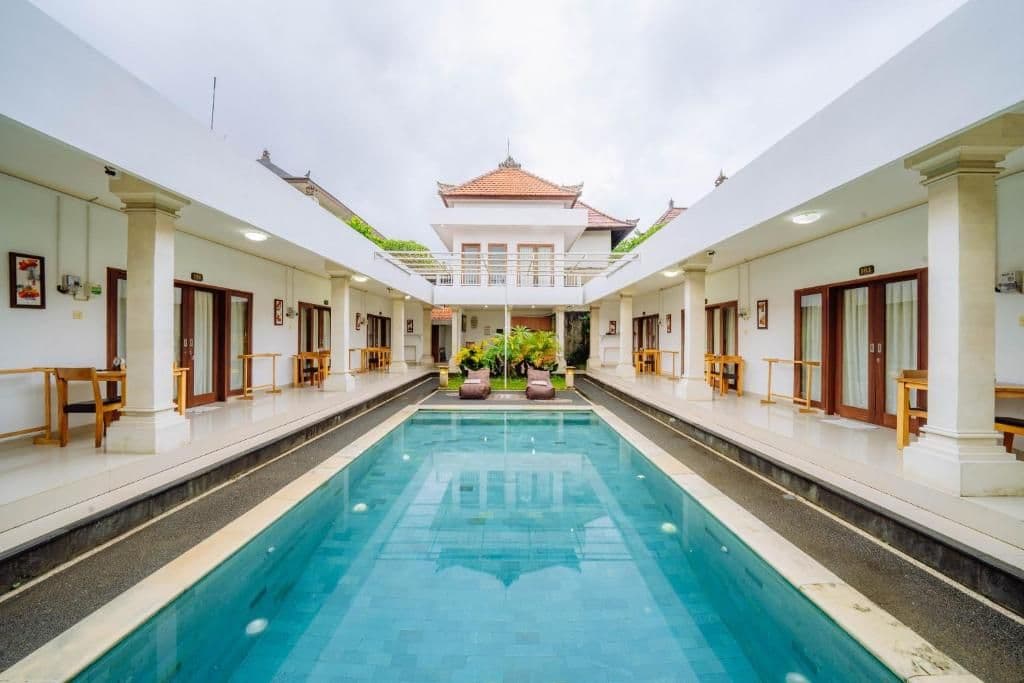
🌴Life in Bali — everyday life beyond university
What you need in everyday life
A semester abroad in Bali is more than just studying. From riding a scooter to the tropical climate and the international community – here you’ll find the key information for your day-to-day life on the island.
Climate & Clothing
Bali enjoys tropical temperatures all year round, ranging from around 25 to 32 degrees. Light, airy clothing is therefore ideal. During the rainy season, which lasts from around November to March, there may be short but heavy showers. When visiting temples, shoulders and knees should be covered out of respect for the local culture.
Mobility & Scooters
Mopeds are the main form of transport in Bali and often the quickest way to get from A to B. Alternatively, you can use ride-hailing services like Grab or Gojek. In Bali, they drive on the left and the traffic can seem chaotic at first. If you’re driving yourself, you should always wear a helmet. Although you don’t need a driving licence to hire a scooter, there are random police checks where you’ll have to pay a small fine if you don’t have an international driving permit. To avoid any hassle, apply for an international driving permit. Many accommodation providers offer scooters directly or can recommend reliable rental companies. We’ll also be offering scooter hire in future.
Food, Drink & Everyday Life
In Bali, you’ll find everything from affordable local warungs to modern cafés and international restaurants. A full meal in a warung often costs just a few euros, whilst Western restaurants and cafés can be significantly more expensive. You’ll also find vegetarian and vegan options almost everywhere. You shouldn’t drink tap water straight from the tap – most accommodation providers offer drinking water dispensers or filtered water. Many everyday tasks are also straightforward: laundrettes are available almost everywhere, and for just a few euros your clothes will be washed, dried and folded. Many students therefore regularly use laundry services instead of doing their own washing.
Internet, SIM & Coworking
Internet access in Bali is good in most student accommodation and villas; Wi-Fi is practically standard in all of them. You can also get a local SIM card or eSIM. The network is better than in Germany ;) Mobile data is relatively cheap and handy for navigation, communication and ride-hailing services like Grab or Gojek. If you want to study or work outside the university or villa, you’ll find plenty of cafés and co-working spaces with fast internet and workspaces, particularly in areas like Canggu.
Costs & Payment
The cost of living in Bali is lower than in Germany for many things – but how much you actually spend depends heavily on your lifestyle. Local food, scooters and many leisure activities are relatively cheap, whilst beach clubs, Western restaurants and imported products can quickly become significantly more expensive. Experience shows that many students spend around €500 to €1,200 a month on top of their accommodation. Payments are made in Indonesian rupiah (IDR). You can pay by card in many cafés, restaurants and supermarkets, but you should still always carry some cash with you. ATMs are widely available. For a longer stay, it’s worth having a credit or debit card with no, or as few as possible, overseas transaction and withdrawal fees.
Health & Safety
Medical care in Bali’s tourist areas is adequate for many everyday ailments. There are international clinics and hospitals with English-speaking staff. Good international health insurance is strongly recommended for a longer stay. A small first-aid kit for the first few days may be useful, but many items are also available locally. You should also speak to your GP or a tropical medicine specialist about vaccinations. There are no compulsory vaccinations for Bali, but some are strongly recommended. Bali is generally considered a relatively safe destination. As everywhere, you should keep an eye on your valuables. Road traffic is a particularly important issue: many incidents involve scooter accidents. You should therefore drive carefully, always wear a helmet and, especially at the start, do not overestimate your ability to navigate Balinese traffic.
Culture, Language & Respect
The official language of Indonesia is Bahasa Indonesia. In tourist areas and university environments, you’ll usually get by just fine with English. However, knowing a few basic Indonesian words and phrases is greatly appreciated by locals and can make everyday life easier. Bali is predominantly Hindu and has a unique culture that is evident everywhere in daily life. Temples, ceremonies and religious festivals are part of everyday life. Behaving respectfully, wearing appropriate clothing in temple complexes and showing consideration for local traditions should go without saying.
Community & Leisure
Every year, Bali attracts students, travellers and people from all over the world. So it’s usually easy to make new friends, whether at uni, in your accommodation, whilst doing sport or on group outings. As well as your studies, there’s surfing, diving, yoga, hiking, island trips and countless other activities to enjoy. Depending on the region, there’s also a lively nightlife with bars, clubs, live music and beach parties. So your semester abroad is definitely not just about lectures.